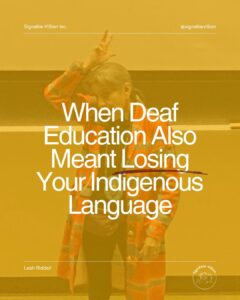
Efforts to rename deafness by non-deaf individuals are not new and have historical roots in assimilation attempts of Deaf individuals into hearing culture. The Milan Conference of 1880 serves as a stark example, where sign language was banned for 150 years in favour of oralism, erasing Deaf culture and language.
Currently, some professionals lacking lived experience, such as doctors, audiologists, and Auditory-Verbal Therapists (AVTs), are using euphemistic terms like “hearing differences” or “reduced hearing,” risking perpetuation of this assimilation legacy. It’s similar when people try to use different words instead of “disability.” Learning from history is crucial to ensure language reflects and respects the diversity of deafness.
Deafness is not merely a medical condition; it constitutes a profound cultural identity for many within the Deaf community. This community, encompassing Deaf, hard of hearing, Deafblind, deafened, and those with cochlear implants (CIs), reflects a rich tapestry of experiences. Sign language, cultural traditions, and shared experiences are integral to this vibrant community. Terms like “Deaf” honour this identity, acknowledging the cultural heritage and linguistic diversity within the Deaf community.
In medical contexts, terms like “hearing loss” provide clarity for accurate diagnosis and treatment by medical professionals. It’s essential for medical professionals to use this terminology to offer appropriate care and support for individuals experiencing varying degrees of hearing loss.
The intersection of Deaf identity and hearing loss necessitates a balanced approach. Preserving both “Deaf” identity and “hearing loss” terminology allows individuals to navigate these intersections comfortably, accessing necessary resources while embracing their cultural identity.
Words hold power. Embracing terms like “Deaf” which is not a dirty word and “hearing loss” empowers individuals to assert their identity and advocate for their needs, fostering community and solidarity among Deaf individuals. Reclaiming these terms reaffirms the value and dignity of every individual, irrespective of their hearing status.
My advice, approach this intersection with respect and inclusivity, empowering individuals to embrace their identity while receiving their needs.
Don’t overstep!
If you wish to learn more, let’s chat.