As this year comes to a close, I want to pause and say thank you.
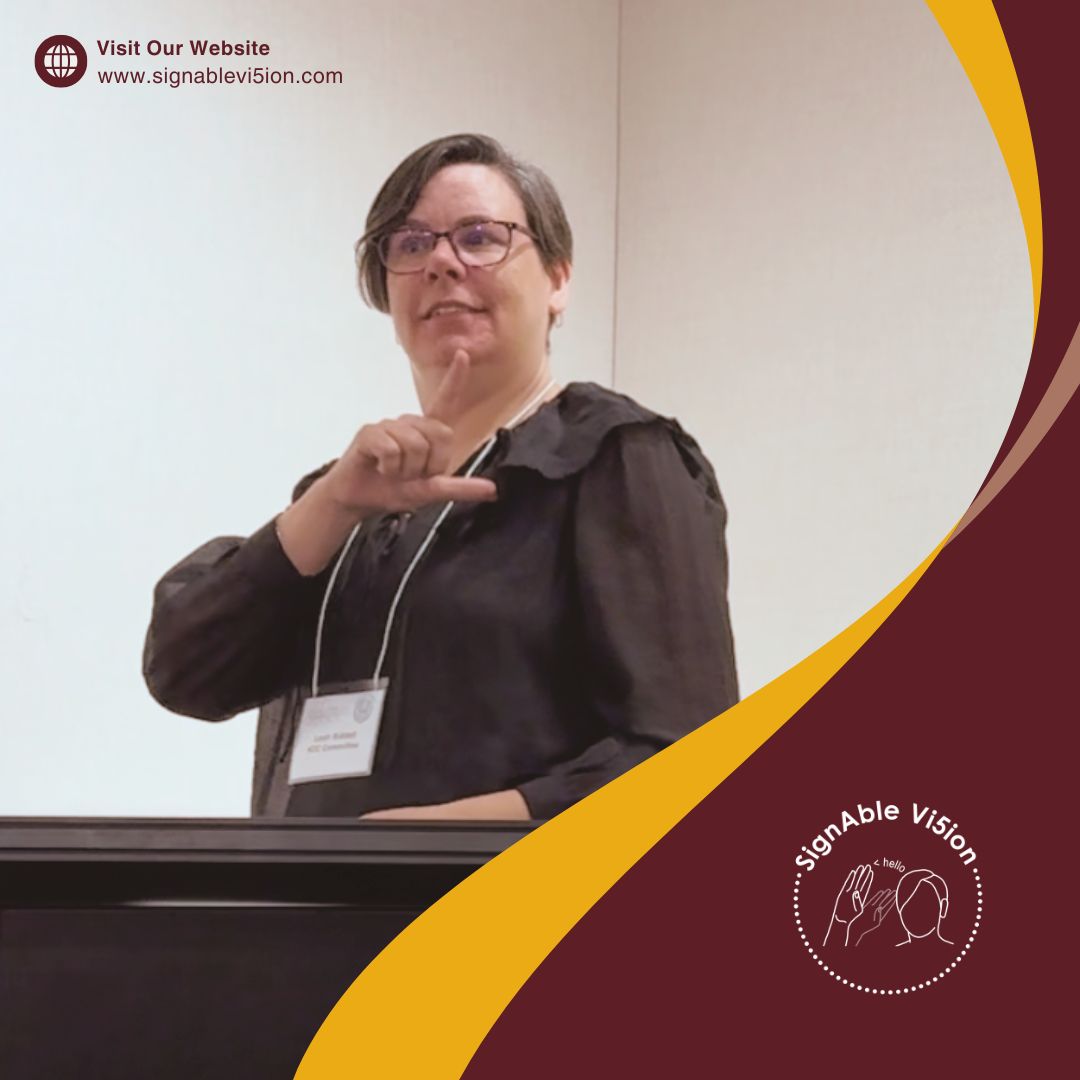
This year took me into a wide range of spaces, from corporate teams at Nestlé Canada and Baxter, to working alongside CCWESTT project management to ensure their services were accessible, to public institutions, educators, and community organizations across Canada. Alongside this work, I also had the opportunity to teach three different ASL groups, including Sensity, the Emmanuel & Trinity United Churches, and the Kingston Seniors Association, each with their own goals, learning styles, and community contexts.
Beyond training and consultation, this year also included collaborative cultural work, teaming with the 2025 OSD-SJW Alumni Association through Hands in Commemoration, and hosting a De’VIA exhibition with Parrott Art Gallery and the Quinte Arts Council. The gallery experience was intentionally designed to be fully inclusive, with ASL, voice-over, captions, and transcripts, ensuring access across Deaf, hard of hearing, and hearing audiences.
Across every presentation, training, and consultation, one thing became clear. Awareness alone isn’t enough. Real change happens when organizations move beyond surface solutions and start designing communication that works in real time, in real environments.
I’m grateful to the teams and learners who trusted me to walk alongside them, asking thoughtful questions, slowing things down, and addressing the root causes of repeated communication breakdowns rather than applying temporary fixes.
Looking ahead to 2026, I’m excited to continue this work with organizations that are ready to build clarity into their systems, not just their statements. The focus remains the same: fewer breakdowns, stronger teams, and spaces where no one is expected to carry the burden of access alone.
Thank you to everyone who has been part of this journey this year.
I look forward to continuing, and beginning, meaningful work together in the year ahead.
Warmly,
Leah