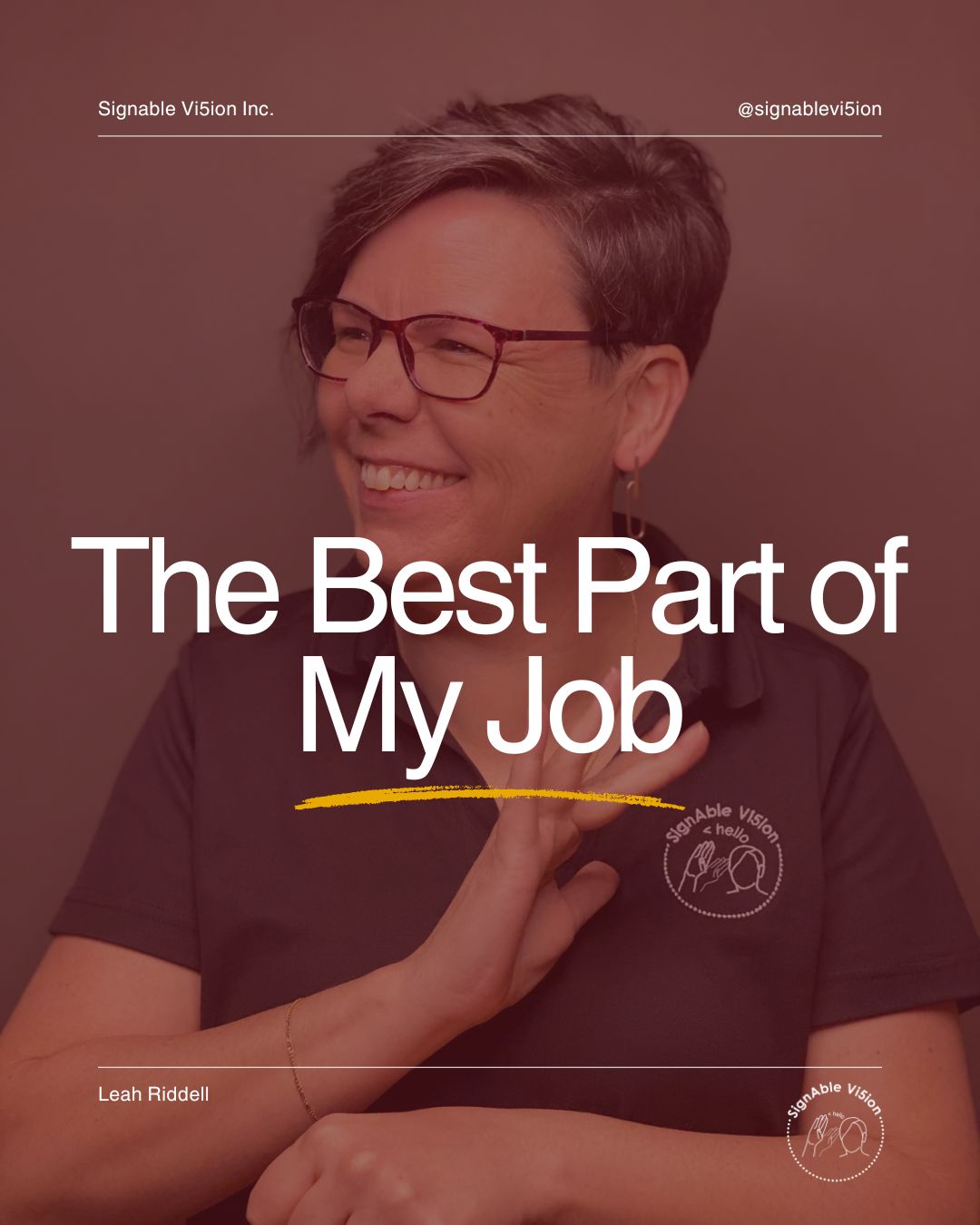
One of the things I enjoy most about my work isn’t standing at the front of the room teaching.
It’s watching the moment everything starts to make sense.
People often arrive at a training session with questions they’re almost afraid to ask. They don’t want to say the wrong thing. They worry about making mistakes. Some have never met a Deaf person before. Others have worked alongside Deaf colleagues for years but still aren’t sure they’re communicating effectively.
I tell them that’s okay.
The training isn’t about knowing all the answers. It’s about being willing to learn.
As we work through Deaf culture, communication, accessibility, and practical workplace situations, something begins to change. The uncertainty starts to disappear. People begin asking thoughtful questions. They stop focusing on what might go wrong and start thinking about what they can do differently.
That’s the moment I look for.
It’s the moment someone says, “I never thought about it that way.”
Or, “Now I understand why that matters.”
Or simply, “This makes so much sense.”
Those moments are rewarding because confidence starts replacing uncertainty.
By the end of the session, people aren’t just learning about Deaf culture. They’re seeing their own workplace differently. They begin noticing barriers they hadn’t seen before, but more importantly, they begin seeing solutions.
That’s why I love this work.
Training isn’t about making people feel guilty or pointing out everything they’ve been doing wrong.
It’s about giving people the knowledge and confidence to do better moving forward.
I’ve had organizations tell me they now feel comfortable hiring Deaf employees. Museums have redesigned tours to be more inclusive. Staff have changed the way they communicate with visitors and colleagues. Leaders have started asking accessibility questions at the beginning of projects instead of at the end.
Those changes don’t happen because someone was criticized.
They happen because someone was given the opportunity to learn.
Real inclusion isn’t built through fear.
It’s built through understanding.
And when people understand, they’re far more willing to take the next step.
That’s why I continue doing this work.
Because every training session has the potential to change not just one person’s perspective, but an entire organization’s approach to communication and accessibility.
If your organization is ready to build confidence, strengthen communication, and create a more inclusive environment, I’d love to help you get there.