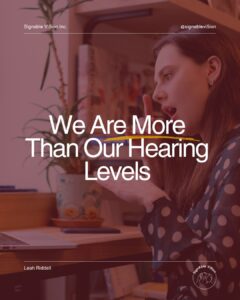
I’d like to take you on a journey into the reasoning behind creating events that are accessible by design; not as an afterthought, but because it’s simply the most logical, effective, and compassionate way to engage everyone.
When planning an event, every decision matters. I’ve come to believe that making accessibility a core element of our planning process isn’t just about meeting standards or ticking boxes; it’s about building a space where everyone can participate and feel included. It starts from the moment guests walk in. Clear, visible signage guides you effortlessly, helping you find restrooms, emergency exits, and dedicated accessibility areas without any confusion. This attention to detail ensures that every guest knows exactly where to go, which in turn reduces stress and increases confidence in the event space.
Real-time captioning is another crucial aspect. In our increasingly fast-paced world, transforming spoken words into text as the presentation unfolds isn’t just a convenience; it’s an essential tool. Captioning provides a text-based record of what’s being said, making the content accessible not only to individuals who are deaf or hard of hearing, but also to those who might have different language preferences or processing needs. It’s about ensuring that nothing is lost in translation, and every word can be fully absorbed by everyone in the room.
A key element that truly sets this event apart is our dedicated team of interpreters. Instead of relying on a single interpreter, we have assembled a skilled team that works in harmony to ensure comprehensive coverage before, during, and after presentations. From the moment you enter, this team is on hand to signal that every communication need is anticipated and met. During the event, our interpreters are strategically placed on stage; specifically on the left side, visible from below. This team approach not only guarantees that the interpretation is continuous and fluid, but it also allows for rotation and support, ensuring that energy and focus remain high throughout the session. Their collective presence aligns perfectly with our thoughtfully arranged VIP seating, ensuring that every member of the audience, regardless of their specific needs, can enjoy the presentation fully.
Our VIP seating, too, is designed with accessibility in mind. These areas are not only reserved for special guests but are configured to offer an optimal view of the stage and the captioning displays. This thoughtful arrangement means that every attendee, whether they require wheelchair access or have other specific needs, enjoys the same enriching experience without any compromises.
This isn’t a matter of going above and beyond for the sake of it, it’s the most logical approach. When every element of the event is carefully designed to support accessibility, we are not merely adding features; we’re creating an environment where everyone can truly connect. This synergy of clear signage, live captioning, a dedicated team of interpreters, and accessible seating transforms an ordinary event into a welcoming space where every voice is heard and every guest is valued.
I believe that accessibility isn’t an extra; it’s a fundamental principle that underpins the success of any gathering. By embracing these practices, we’re not only making our events smarter and more inclusive, but we’re also setting a standard for how all events should be conducted. The logic is simple: an event that welcomes all participants from the moment they arrive, engages them throughout the experience, and supports them even afterward is an event that truly succeeds.
I invite you to share your thoughts, experiences, or questions about accessibility in events. Let’s continue this conversation and work together to ensure that every event leaves no one behind.