
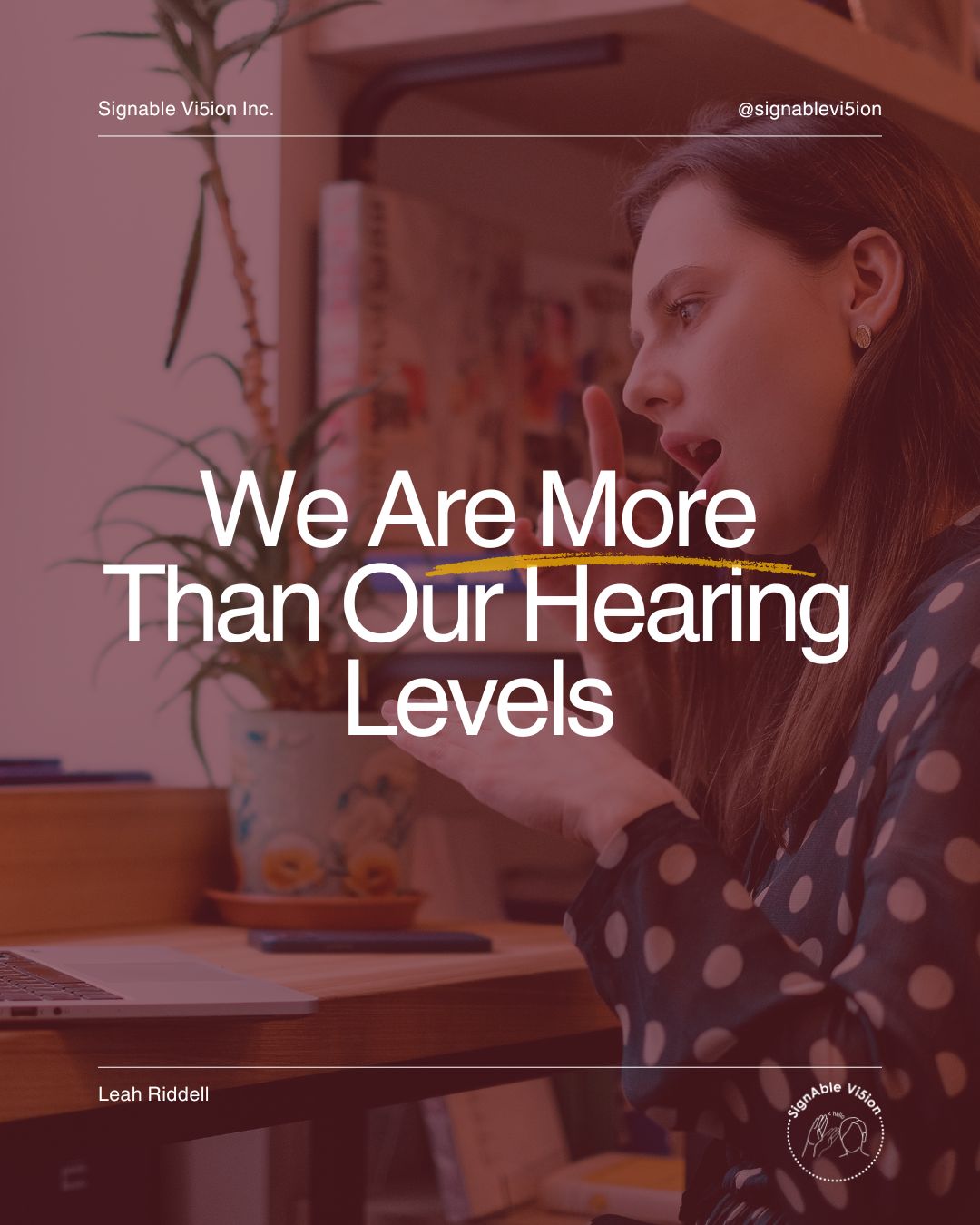
A special message for Deaf Awareness Month, International Week of Deaf People and International Day of Sign Languages — September 23
Every September, I see organizations celebrating Deaf Awareness Month, International Week of Deaf People and International Day of Sign Languages. I appreciate the recognition, but I also notice how often Deaf awareness is presented alongside hearing aids, cochlear implants, hearing tests and information about hearing loss. We are still missing an important part of what these celebrations are actually about.
We are a community with our own languages, cultures, histories and identities.
When people meet me, the conversation often begins with my hearing. How much can I hear? Do I wear hearing aids? Have I considered a cochlear implant? Very rarely does someone begin by asking about my language, my culture or what it means to belong to the Deaf community. We have become so accustomed to looking at deafness through a medical perspective that people often overlook an entire community built around a shared language and cultural experience.
Think about how we celebrate other languages and cultures. We encourage people to learn French, Spanish and many other languages. We celebrate their traditions, literature, histories and contributions to society. We recognize that learning another language opens opportunities to connect with people and understand the world differently. Yet when it comes to sign languages, the conversation often returns to hearing loss and communication accommodations rather than recognizing the languages themselves.
American Sign Language is a complete, natural language with its own grammar, structure and cultural expression. It is not English translated into hand movements. Sign languages are used by communities around the world, and they are not universal. Like spoken languages, they have their own histories and regional differences.
One of the things I enjoy most about my work is teaching hearing people about Deaf culture and sign language. We welcome people into our world, share our experiences and encourage them to learn our language. I love seeing that moment when someone begins to understand that Deaf culture and language are connected, just as they are in other linguistic communities.
But there is something I wish more people would recognize.
We welcome hearing people into our world, yet we continue to face barriers when participating in theirs.
We teach our language, share our culture and explain our communication needs. Meanwhile, we still encounter workplaces that depend entirely on spoken communication, public events without interpreters, museums with audio-only experiences and organizations that assume hearing technology is the answer to accessibility.
Hearing aids and cochlear implants are personal choices and may benefit individuals in different ways. They are not replacements for sign language, nor do they define someone’s connection to the Deaf community. Our language should not be treated as something we need only when technology is insufficient.
During Deaf Awareness Month, I want people to look beyond hearing levels and medical equipment. Learn about our language. Discover our history. Recognize Deaf artists, educators, professionals and community leaders. Understand how our culture has developed and continues to thrive.
And when you learn sign language, recognize that you are learning another language, not simply acquiring a few gestures to help someone who cannot hear.
As we celebrate International Day of Sign Languages on September 23, I hope more organizations will recognize that Deaf awareness is about much more than understanding hearing loss. It is about respecting linguistic and cultural identities and creating opportunities for Deaf people to participate equally in society.
We have so much to share with the world. I would love to see the same curiosity and willingness to learn extended toward us.

