One thing I often ask organizations is a simple question:
When do you start thinking about accessibility?
For many, the answer is when someone requests it.
A Deaf person registers for an event. An employee asks for an interpreter. A visitor requests captions. A customer identifies an access need.
Only then does the planning begin.
But that’s already too late.
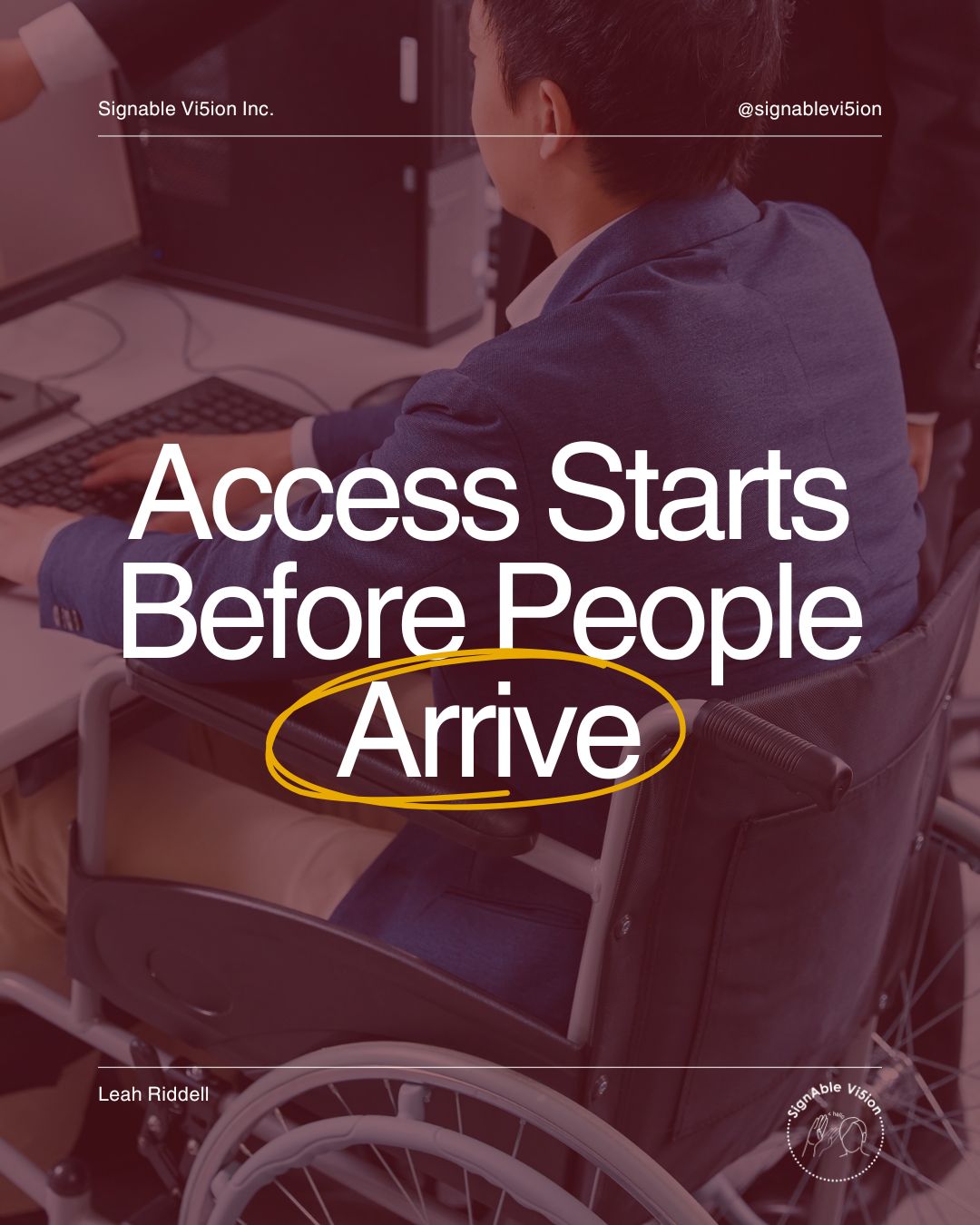
Access works best when it’s built into planning from the start.
Before invitations are sent.
Before interviews are scheduled.
Before meetings are booked.
Before exhibits are designed.
Before services are launched.
The organizations that do accessibility well aren’t constantly scrambling to respond to requests. They’ve already considered how people with different communication needs will participate.
They’ve already asked the questions.
How will people access information?
How will communication happen?
What barriers might exist?
What can we do now instead of waiting for someone to struggle later?
This shift changes everything.
Instead of putting the responsibility on individuals to identify problems, organizations begin taking responsibility for reducing barriers before they happen.
And that’s where inclusion starts becoming visible.
People notice when registration forms ask about communication preferences.
People notice when interpreters are already planned for.
People notice when captions are available without needing to ask.
People notice when staff know what to do.
Most importantly, people feel welcomed.
Not accommodated after the fact.
Welcomed from the beginning.
I’ve seen this happen in workplaces, museums, conferences, community events, and public services. The organizations that create the best experiences are rarely the ones spending the most money.
They’re the ones spending time planning.
Because accessibility isn’t something you add at the end.
It’s something you build from the beginning.
And when you do, fewer people get left behind.
If your organization wants to build accessibility into planning instead of reacting after barriers appear, I provide training and consultation to help you get there.