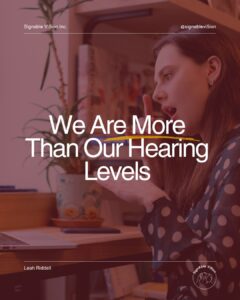
And Why Assumptions Cause Harm
There is a workplace misconception that never seems to disappear:
“If someone has a cochlear implant, they can hear now, problem solved.”
This assumption shows up in meetings, interviews, performance reviews, trainings, and even casual conversations. It comes from good intentions, but it leads to real harm. It places unrealistic expectations on Deaf employees and shifts responsibility away from the workplace and onto the individual.
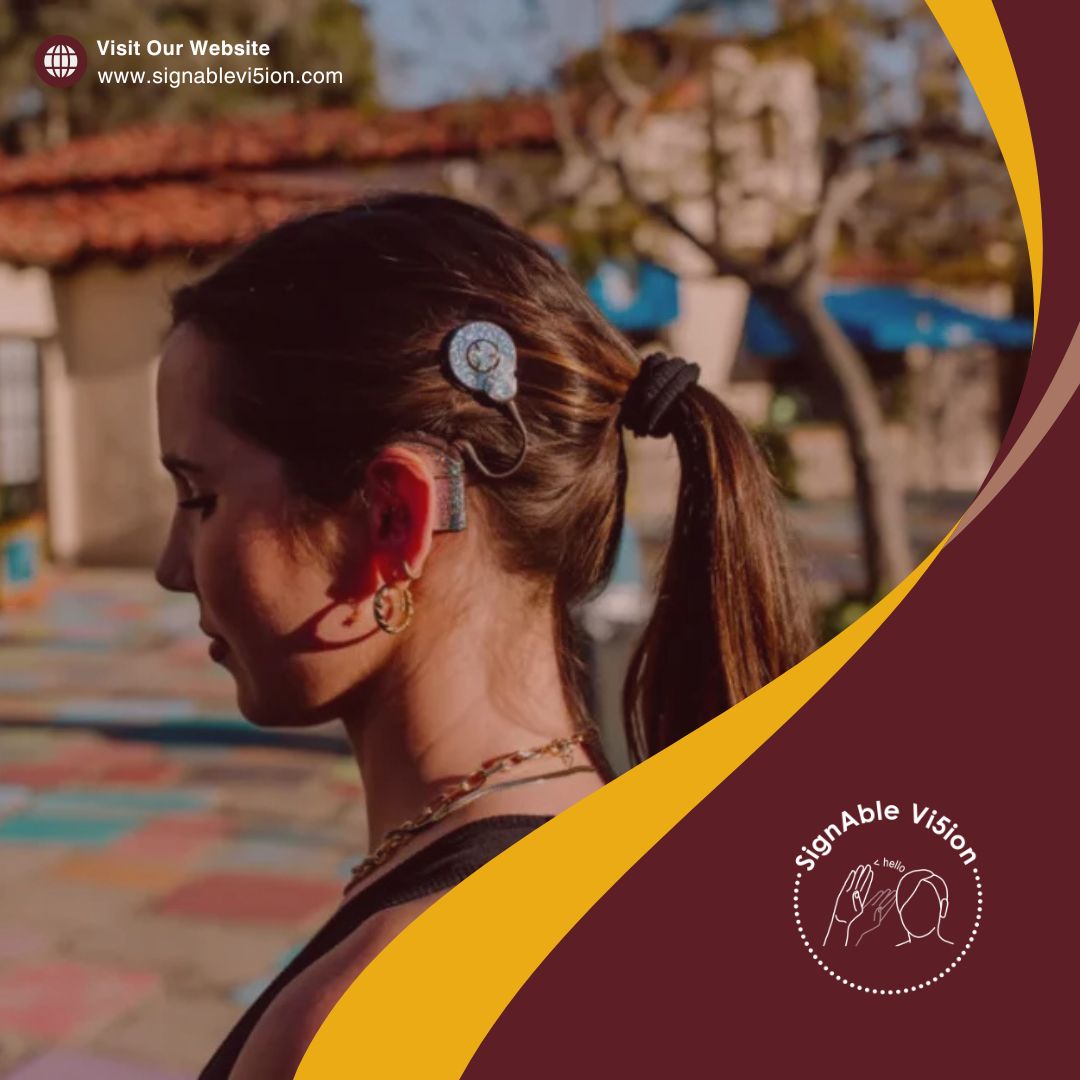
Cochlear implants (CIs) can benefit some people, and they can also fail to provide meaningful access for others.
My own experience is an example of how complex, unpredictable, and misunderstood this technology truly is.
The Assumption: A CI Means “Normal Hearing”
When I was implanted as an adult, many people thought it meant I could finally hear the way they do. They assumed I’d no longer need interpreters, captions, written notes, or visual communication. They imagined the CI would “fix” my access needs.
That misconception followed me into professional spaces.
People expected sudden clarity, fluent speech comprehension, and effortless communication.
But that is not how CIs work.
The Reality Behind the Technology
After surgery, nothing was simple.
Mapping appointments required four hours of travel each time.
Instead of speech training, I needed sound training, because everything sounded distorted. Even my own family’s voices were unrecognizable.
For an entire year, every mapping yielded the same result:
one pitch, no improvement.
This wasn’t a lack of effort. It was simply the limitation of what my brain could process through the implant.
Eventually, I stopped using the sound processor. But I still lived with the implant inside me for 18 years. In the last five years, it began sliding downward and causing electric shocks. It took five years of advocating and pushing before a surgeon finally listened and removed it last Wednesday.
This was my journey, but experiences vary widely.
Some people benefit. Some don’t. Many fall somewhere in between.
What doesn’t vary is this:
a CI never guarantees access.
Why This Matters in the Workplace
When hearing colleagues believe a CI “fixes” everything, it creates immediate pressure on the Deaf employee:
- Expectations to follow spoken meetings without support
- Assumptions that interpreting or captioning is no longer needed
- Blame placed on the Deaf person if communication breaks down
- Comments like “But you have an implant, why didn’t you hear that?”
- Performance being tied to hearing ability instead of communication access
The burden shifts unfairly onto the employee to “keep up” rather than onto the workplace to create accessible communication.
And often, the Deaf person ends up masking, guessing, or overworking just to avoid being seen as “difficult.”
The Most Overlooked Truth: Language Comes First
Workplaces also misunderstand what CIs are designed to do.
Listening and speaking are not the only way, and certainly not the foundation.
A CI does not erase a Deaf person’s primary language. It doesn’t replace ASL. It doesn’t rewrite cultural identity.
Spoken language can be part of a Deaf person’s communication toolkit, after a strong language foundation is established.
For Deaf children especially, sign language must come first.
Trying to build communication on listening and speaking alone places impossible pressure on the child and leads to language deprivation.
In the workplace, the assumption that “hearing equals success” is simply outdated.
So What Should Workplaces Do Instead?
Here is what actually supports Deaf employees, with or without a CI:
1. Ask about communication preferences, don’t assume them
A CI does not automatically change what the employee needs.
2. Provide accessible meeting structures
Interpreters, captions, agendas, visual information, summaries; tools that support everyone.
3. Avoid comments that imply “not hearing” is the problem
The barrier is the environment, not the person.
4. Treat sign language as equal, not optional
It is not a “backup plan.” It is a full language.
5. Understand that CIs are tools, not cures
They may help someone hear sounds. But comprehension, fatigue, distortion, and inconsistency are daily realities for many CI users.
Why I’m Sharing This
I don’t regret getting a cochlear implant.
I learned from it. I know the effort it requires. I know the emotional weight behind every mapping, every expectation, every assumption placed on me by others.
But I also know this:
The workplace narrative around CIs needs to change.
We need to stop treating CIs as the end of the story.
They are one option, not a guarantee, not a replacement for sign language, and not an excuse for workplaces to avoid building accessible environments.
True inclusion isn’t built on technology.
It’s built on communication, respect, and accountability.
And that’s something no implant can replace.
With that said, I am taking a leave to recover this month. I wish everyone a great holiday.