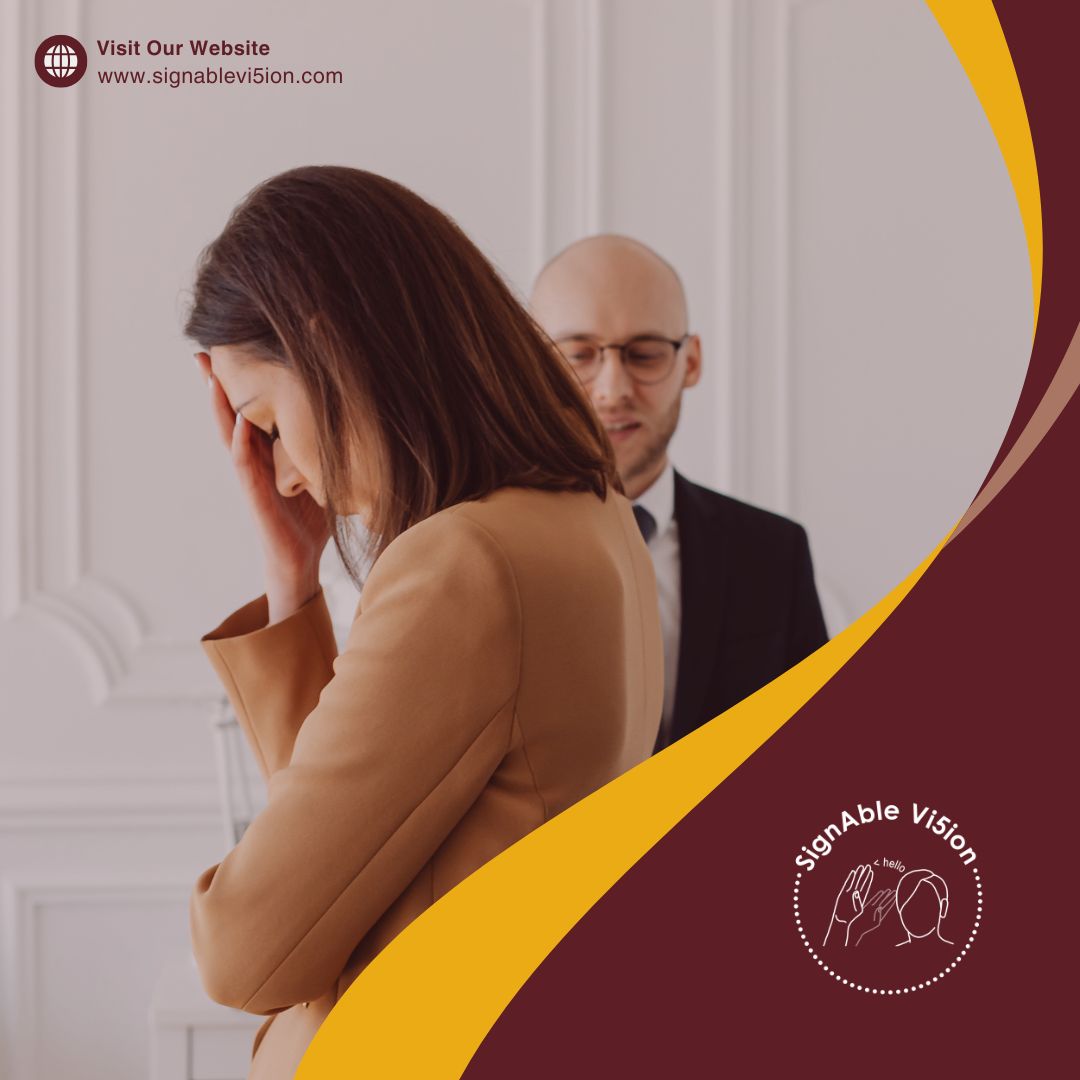
I met someone recently who struggled with communication in a group setting. The signs were subtle; hesitating to join in, relying on others to fill the silence, smiling to mask confusion. It didn’t take long for me to realize they were facing a communication barrier.
But they didn’t say anything.
Not because they were ashamed, but because they didn’t feel safe to.
That’s the reality for so many employees today. People who need support, whether for hearing, mental health, or any disability-related reason, often keep quiet. Why? Because they’ve seen what happens when others speak up.
They’ve seen people labeled.
They’ve seen opportunities quietly disappear.
They’ve seen how “difference” can change how others look at you.
And that’s not an individual problem. That’s a culture problem.
Recent findings show that many employees worry that asking for accommodations could hurt their careers. Around four in ten fear it might hold them back from advancement or even cost them their job. Another third hesitate because they don’t want to be treated differently or singled out.
Yet when asked if they’d explore what support is available, most said yes, but only if it could be done anonymously. That’s how deep the trust issue runs.
Too many workplaces still treat disclosure like a test of courage, when it’s really a test of trust. If employees fear being judged, pitied, or seen as “less capable,” they’ll stay silent, even when the right tools could make all the difference.
And here’s something else we need to talk about: tokenism.
It’s not enough for a company to proudly say, “15% of our staff identify as having a disability,” if those same employees don’t have access to the tools they need to thrive. Numbers don’t prove inclusion, access does. Real inclusion means building systems where people don’t need to fight for what should already be there.
So here’s what can shift everything: stop waiting for disclosure.
Start by building access into how your team operates. Make captions, interpreters, quiet meeting options, written summaries, and visual aids standard practice. Normalize flexibility and communication support for everyone, not just the people who ask.
When accessibility becomes part of the environment, no one has to risk their job or their dignity to get what they need.
Inclusive communication isn’t just a tool, it’s an invitation. It tells people, “You belong here exactly as you are.”
That’s how you build safety.
That’s how people finally start to speak up.
Link to article lead me to create a blog: https://www.forbes.com/sites/gusalexiou/2024/10/30/nearly-half-of-employees-fear-requesting-disability-accommodations-data-shows/