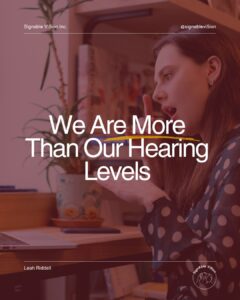
I’ve learned the hard way that the world wasn’t designed with me in mind. Being Deaf means I move between many different communication spaces; sometimes signing, sometimes adapting to people who don’t. Some of us use our voices, some of us use technology, some of us don’t use either. There isn’t one way to be Deaf. But what we share is the reality of trying to function in systems that rarely stop to ask how we actually communicate.
That shows up in all kinds of ways. A doctor discussing your condition with others while you sit in silence. A workplace meeting where you’re overlooked, not because you don’t have the answers, but because no one thought to make the conversation accessible. Public announcements that matter; about safety, emergencies, even daily life—fade into the background when they’re only delivered by voice. Training, resources, and opportunities roll out every day without captions, transcripts, or interpretation, and we’re expected to “catch up” on our own.
For me, this isn’t about being inconvenienced. It’s about being left out of spaces where decisions are made, where safety is on the line, and where opportunities for growth should be equal. Every time access is missing, it chips away at dignity and independence. That’s why I keep speaking up. Because when accessibility is treated as optional, people like me are treated as invisible. And none of us should have to fight this hard just to be included.
What makes it worse is how often accessibility is left until the very last minute, or only added once something goes wrong. Too many organizations scramble to fix problems after being called out, or after someone is harmed, or when they realize they’re suddenly liable. This reactive approach needs to stop. Waiting until failure or legal risk forces change is not inclusion, it’s damage control. Accessibility must be built in from the start, not tacked on at the end.
And let’s be clear: this isn’t just a Deaf or sign language user problem. It’s a communication issue that every organization faces. When communication isn’t clear or accessible, businesses lose productivity, trust, and talent. Employees disengage, customers leave, and reputations suffer. On top of that, organizations expose themselves to legal risk, complaints, and costly fixes that could have been avoided with planning. Poor communication isn’t just a barrier for the Deaf community, it’s a leadership failure that impacts everyone.
So here’s the call: stop waiting until someone points out the barriers. Build accessibility in from the beginning, whether that’s providing sign language interpreters, captions, transcripts, or simply asking what people need. Inclusion isn’t an extra feature; it’s the baseline. If you want communities, workplaces, and services where everyone can contribute fully, and if you want your organization to thrive, then access has to be the rule, not the exception.
Practical first steps organizations can take right now:
- Budget for accessibility: plan ahead for interpreters, captioning, and accessible materials instead of scrambling at the last minute.
- Train your teams: give staff Deaf awareness and inclusive communication training so accessibility becomes second nature.
- Embed accessibility checks: treat captions, transcripts, and accessible formats like mandatory safety checks, not extras.
- Ask, don’t assume: regularly consult with staff, clients, or community members about their communication needs.
- Make it policy: put clear accessibility guidelines in writing so they survive leadership changes and tight deadlines.
And if you’re not sure where to start, that’s exactly where I come in. I work with organizations to identify barriers, train staff, and create strategies that make accessibility part of the foundation, not an afterthought.