This is something that can happen so naturally that people don’t even realize they’re doing it.
I’m standing right there, but someone turns to the interpreter and asks, “Can you tell her…?”
Or they ask the interpreter a question about me while I’m sitting beside them.
Sometimes it’s even something as simple as, “Does she understand?”
I’m right there.
I know most people aren’t trying to be disrespectful. Often, they’re unfamiliar with working with an interpreter and aren’t sure where to look or how the communication process works. The interpreter is speaking, so naturally their attention goes toward the person whose voice they hear.
But that small shift changes the conversation.
The interpreter isn’t having the conversation with you. I am.
If I sign something and the interpreter voices it, those are still my words. If you ask a question, ask me. If you’re explaining something, explain it to me. If we’re having a disagreement, disagree with me. If I make you laugh, laugh with me.
It sounds simple, but this matters even more in the workplace.
Imagine being in a job interview and watching the interviewer build more connection with your interpreter than with you. Or sitting in a performance review while your manager keeps looking at the interpreter. Imagine presenting your own work and watching questions being directed to someone else.
You can be completely involved in the conversation and somehow still become the third person in your own meeting.
There is another side to this that people don’t always think about. Interpreters are professionals providing communication access. They aren’t there to answer for the Deaf person, explain what the Deaf person thinks, make decisions for them, or become their representative.
And Deaf people are not all the same. An interpreter doesn’t suddenly become an expert on me because they’re interpreting for me.
When I work with organizations, I usually find that once this is explained, people adjust quickly. Look at the Deaf person. Speak naturally. Let the interpreter do their job in the background of the relationship rather than becoming the centre of it.
You don’t need to know sign language to make that human connection.
You just need to remember who you’re talking to.
Accessibility isn’t only about making communication possible. It’s also about respecting the person whose voice is being interpreted.
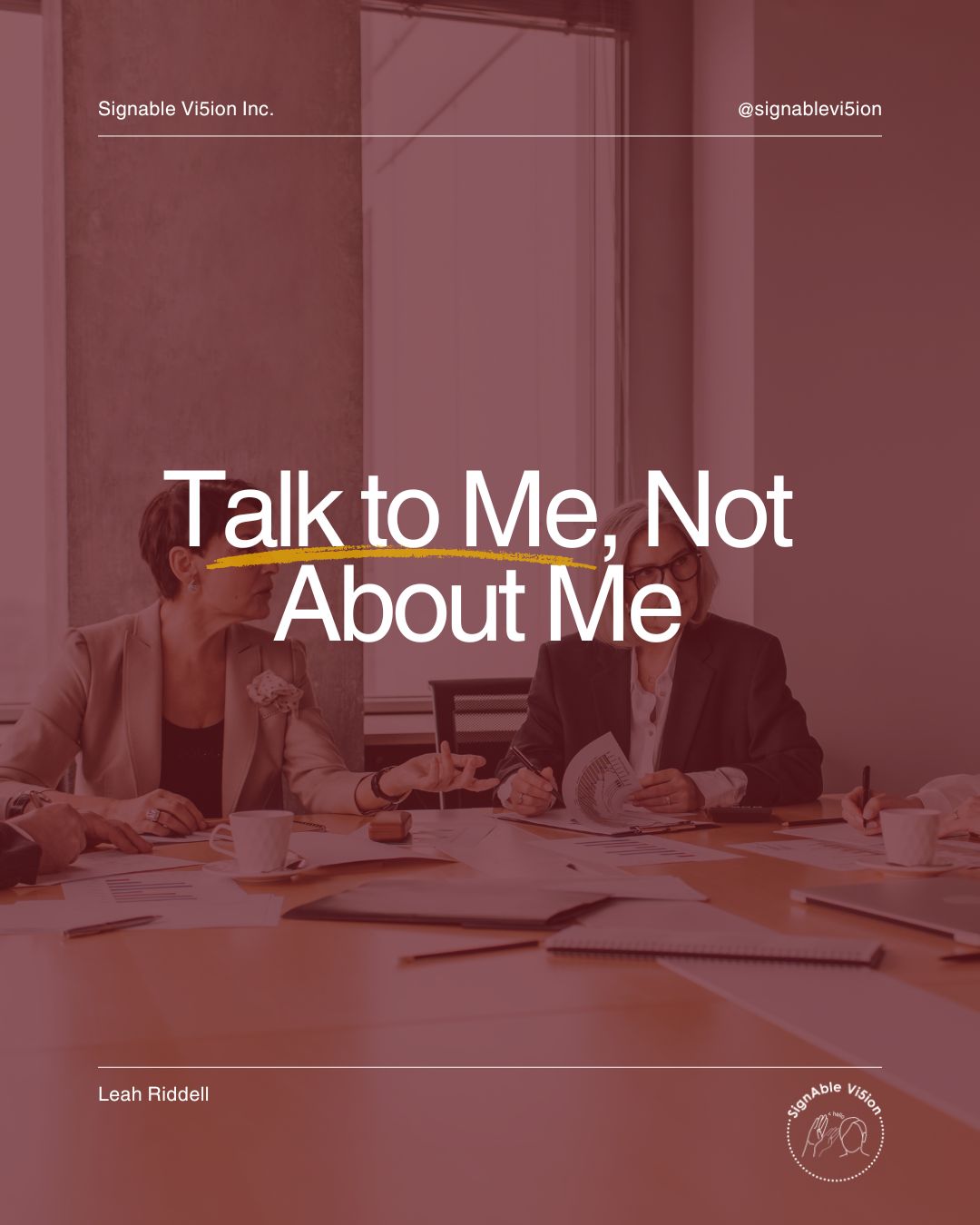
Talk to me, not about me.