Sign language is something to celebrate. It’s culture, connection, identity. But that’s not where my story started.
I was born into a hearing family. My parents didn’t grow up with sign language and didn’t really know what it meant or what it could give me. They were doing what most hearing parents do; trusting the professionals, following the advice, trying to do what was “right.”
So we started with listening and speaking. Someone would come in and teach vocabulary signs here and there, but it wasn’t language. It was just bits and pieces. Enough to get by, but not enough to fully understand the world around me.
And to be fair, that was the reality 50 years ago. Resources were limited. Deaf-led leadership wasn’t visible. There weren’t Deaf educators, Deaf PhDs, or strong community voices leading the conversation the way we see now. My parents were working with what they had.
But even then, it wasn’t easy.
They were told the same things parents are still told today; that sign language would interfere, that I’d be fine, that I should focus on hearing because it’s a “hearing world.” Imagine trying to make decisions for your child while being told not to explore something that could actually help them.
And even though they didn’t fully understand sign language at the time, they knew something was missing. So they kept going. They kept searching.
ASL didn’t come into my life until the 1990s, when I was in high school. That’s late. But it came through someone who took the time to connect with our family; a vice principal from Sir James Whitney School for the Deaf, who had been an interpreter. He introduced American Sign Language to my parents, my grandparents, all of us. And we learned together at home.
That didn’t come from the system. That came from people stepping in and parents being willing to try something new, even after years of being told otherwise.
From my side, as the Deaf child – that shift mattered.
It wasn’t just about communication or school. It helped me understand more of what was going on around me and gave me a way to express myself. But it didn’t fix everything. My identity was still in crisis for a long time. I was signing, yes, but I didn’t fully understand the culture or what it meant to be Deaf. That didn’t come until much later, into my 40s. Language opened the door, but understanding myself took time.
When I look back, I don’t see parents who had all the answers. I see parents who showed up, who pushed through confusion, who kept going even when it was exhausting and unclear.
And I’m grateful for that.
Because today, things are different – at least they should be.
We have Deaf-led leaders. Deaf educators. Research. Resources. Clear understanding of how important language access is.
And yet… the pushback is still there.
Different wording, same message. From doctors, audiologists, teachers.
That’s the frustrating part. Back then, the barrier was lack of resources. Now, a lot of the time, it’s mindset.
Ignorance still exists.
So yes, celebrate sign language. Absolutely.
But also recognize what it takes for many families to even get there. The pushback. The constant advocating. The mental exhaustion of fighting for something that should never have been denied in the first place.
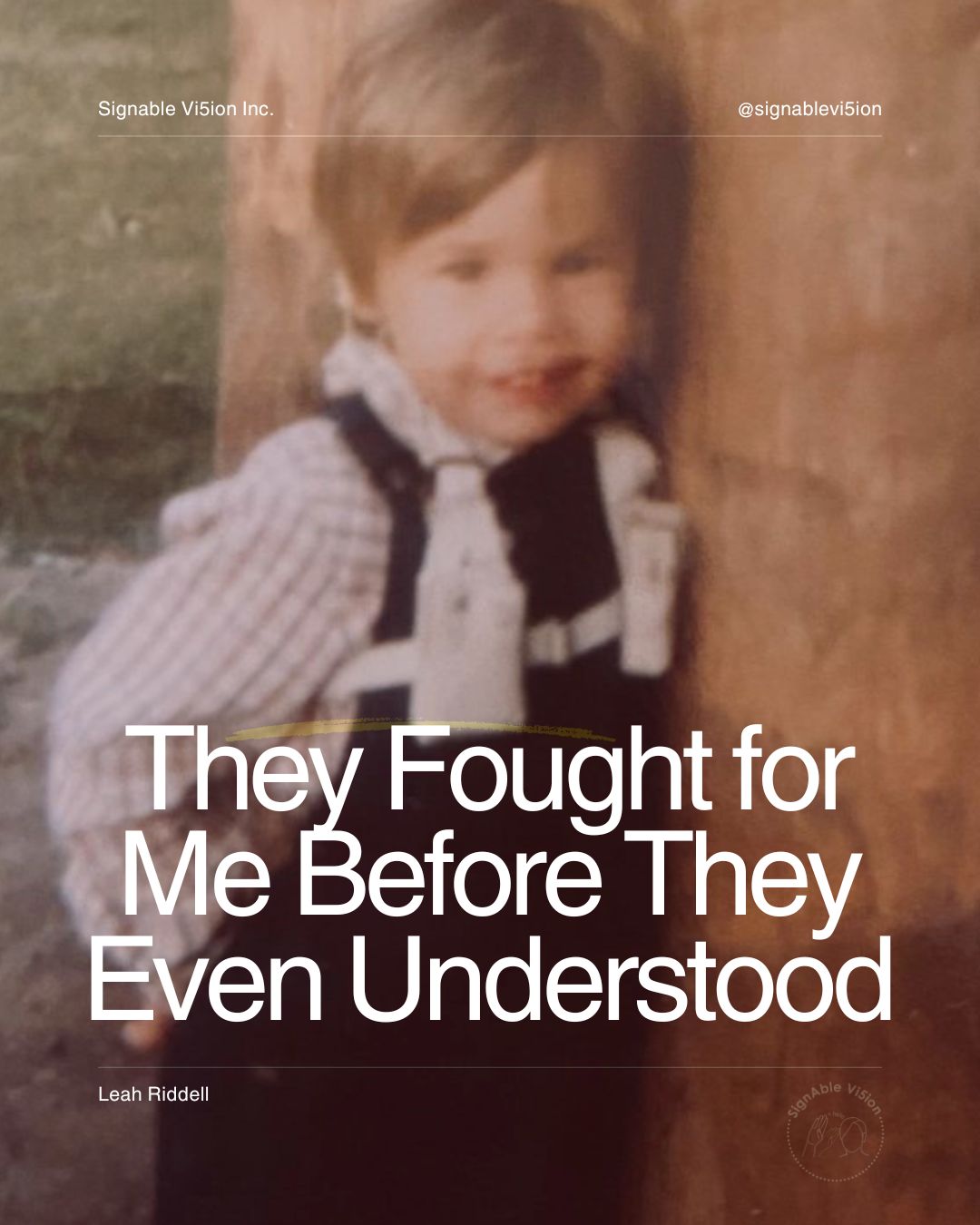
My parents didn’t fully understand what they were fighting for at the beginning.
But they fought anyway.
We don’t need to keep repeating the same barriers. If you’re ready to do things differently – for your child, your family, or your workplace -start asking better questions and seek out Deaf-led guidance.